
Logistics in Argentina: A 2025 Full of Challenges and Opportunities
Leer más5 Mistakes When Transporting Fragile Cargo and How to Avoid Them
Compartir


5 Mistakes When Transporting Fragile Cargo and How to Avoid Them
Is your company prepared to transport fragile cargo safely? If you still have doubts, want to better protect your products, and eliminate operational errors, this article will help you identify the main problems and their solutions.
Before we begin, it’s worth reinforcing the concept of fragile cargo. This refers to objects with a high probability of breaking or being damaged during transportation. This group includes glass, ceramics, electronic devices, and audiovisual equipment. If your business handles any of these products, it is essential to pay attention to the following common mistakes and learn the best practices to avoid them.
- Using Incorrect Packaging
Packaging not only identifies the product but also reduces or neutralizes damage in case of accidents. Using weak materials is a major mistake. For fragile cargo, packaging must be sturdy and reinforced.
Solution: Opt for rigid packaging and use internal cushioning elements such as foam, expanded polystyrene, and bubble wrap. Also, ensure there are no empty spaces inside the boxes to prevent internal movement during transport.
- Placing Fragile Cargo on the Bottom
This mistake may seem obvious, but it is more common than it appears. Placing fragile cargo under other packages can result in deformations, fractures, or damage due to the weight of objects placed on top.
Solution: Always place fragile items on top, ensuring they are not subjected to excessive pressure or abrupt movements.
- Failing to Identify Packaging
Without proper labeling, logistics operators may handle packages without due care, increasing the risk of damage.
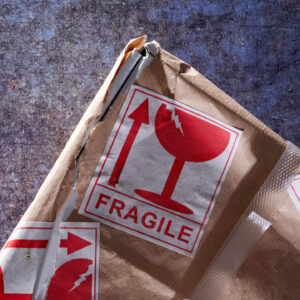
Solution: Properly label each box with the word “Fragile” and use standardized symbols to indicate the type of handling required. This way, everyone involved in the logistics chain will be informed about the correct handling.
- Not Securing the Cargo
During transport, any sudden movement can cause damage if the cargo is not properly secured within the vehicle.
Solution: Use securing systems such as pallets, wedges, tie-down straps, and stretch film to prevent displacement. However, ensure that the applied pressure is not excessive, as it could compromise the packaging.
- Allowing Moisture Exposure
Weather conditions can affect the integrity of certain sensitive materials, especially on long journeys where temperature variations occur.
Solution: Anticipate environmental conditions along the route and protect the cargo with humidity control systems. Use desiccant silica gel inside the packaging, and if necessary, adjust the vehicle’s climate control to prevent condensation.
Optimizing Fragile Cargo Transportation
Now that you know the most common mistakes and how to avoid them, it is also important to evaluate how to improve logistics management. Having the right tools for shipment planning and traceability can make a difference. Platforms like Follow GO allow real-time cargo monitoring, ensuring that shipments arrive in optimal condition and without unexpected issues.
With good planning and by applying best practices in handling and transportation, your company can reduce damage costs and provide better service to its customers.
